

Your Emergency Fund Doesn’t Have to Live in a Bank
A savings account isn’t the only place for reserves. Compare growth, taxation, and death benefit protection between savings and whole life insurance.
A savings account isn’t the only place for reserves. Compare growth, taxation, and death benefit protection between savings and whole life insurance.

Gary North’s critique of whole life insurance and Infinite Banking was influential—but flawed. Ryan Griggs explains what North got wrong.

IBC is not how the wealthy got rich — it is how they preserved wealth. Controlling the banking function is available to any family, at any income level.

IBC is not about wash loans or arbitrage. It’s about controlling the banking function—and why the wash loan claim misreads whole life mechanics.

No, you don’t have to pay policy loans back. But that is short term thinking and stealing from yourself.

The Infinite Banking Concept is a biblical alternative to conventional finance — restoring control of the banking function, enabling charity, and aligning stewardship with God’s law.

IBC Policy Design should maximize capital accumulation without triggering MEC status. Base-to-PUA ratio, dividends, and term riders all determine the design.

A whole life dividend is a return of premium—and your share of company profits. Here’s how dividends work, what direct recognition means, and how to use them.

Whole life insurance cash value is the present value of a guaranteed future death benefit — not a side account. Here’s what the critics get wrong, and why.

Churches can use the Infinite Banking Concept to provide for their pastor, finance expenses, and give generously—with unique advantages other organizations don’t have.

In a 2022 post, Policy Genius claims to tell the truth about Infinite Banking. But do they?
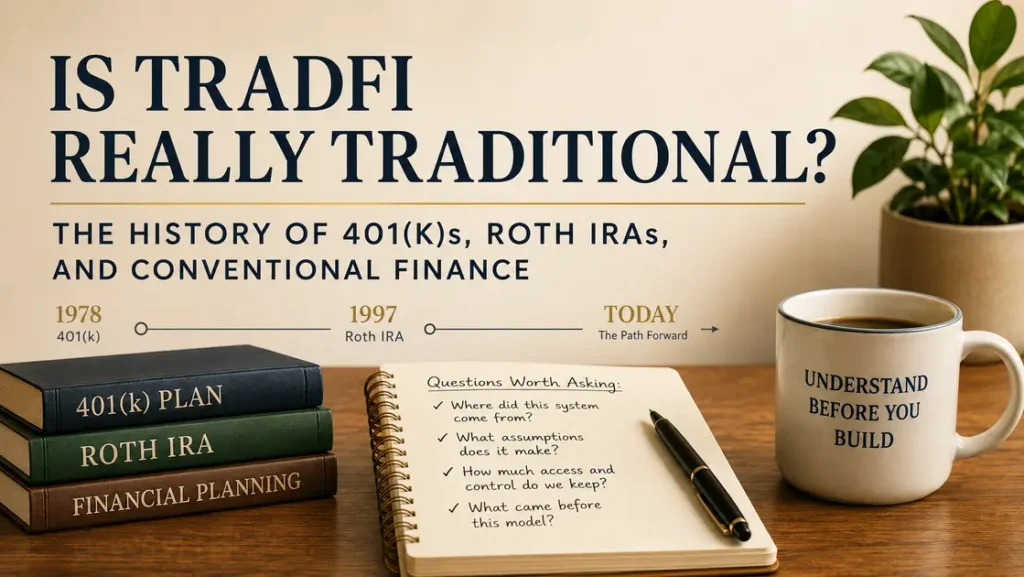
“Traditional Finance” is not traditional. There is an older more efficient way to finance your life.