The Financial Foundation Modern Planning Skips
By
/ Published:
/ Updated:
/ Read Time:
In Brief:
A sound financial plan starts with a working capital reserve — not a bare-bones emergency fund — sized to cover life’s expenses and opportunities without debt. Without one, families end up borrowing to handle life today even as their net worth grows on paper. Investing should follow this foundation, not precede it.
In This Article
- Building Wealth Starts Before You Invest
- A Household Can Have Assets and Still Be Undercapitalized
- Your Money Is Capital, Not Cash
- Invest From a Position of Strength
- The Order You Choose Determines Whether You’re Free
There is something strange about a financial plan that can leave you with tens or hundreds of thousands of dollars accumulated for the future while forcing you to borrow money to handle life today. It is not that setting aside for the future is a problem. But the priorities are off.
We often talk about emergency savings, debt management, insurance, and investing as separate financial tasks — and then reserve the phrase building wealth for what happens in a qualified investment or brokerage account.
But wealth is the ability to purchase the things you want and need to sustain and enjoy life. Accessible capital is part of that wealth, not a box we check before we start building wealth.
The first priority of a household should be to build a strong financial foundation: a growing pool of capital that remains accessible and can help finance life as it actually happens.
Anything else is like trying to build a house on a foundation that is too small — and the concrete isn’t even dry yet.
Building Wealth Starts Before You Invest
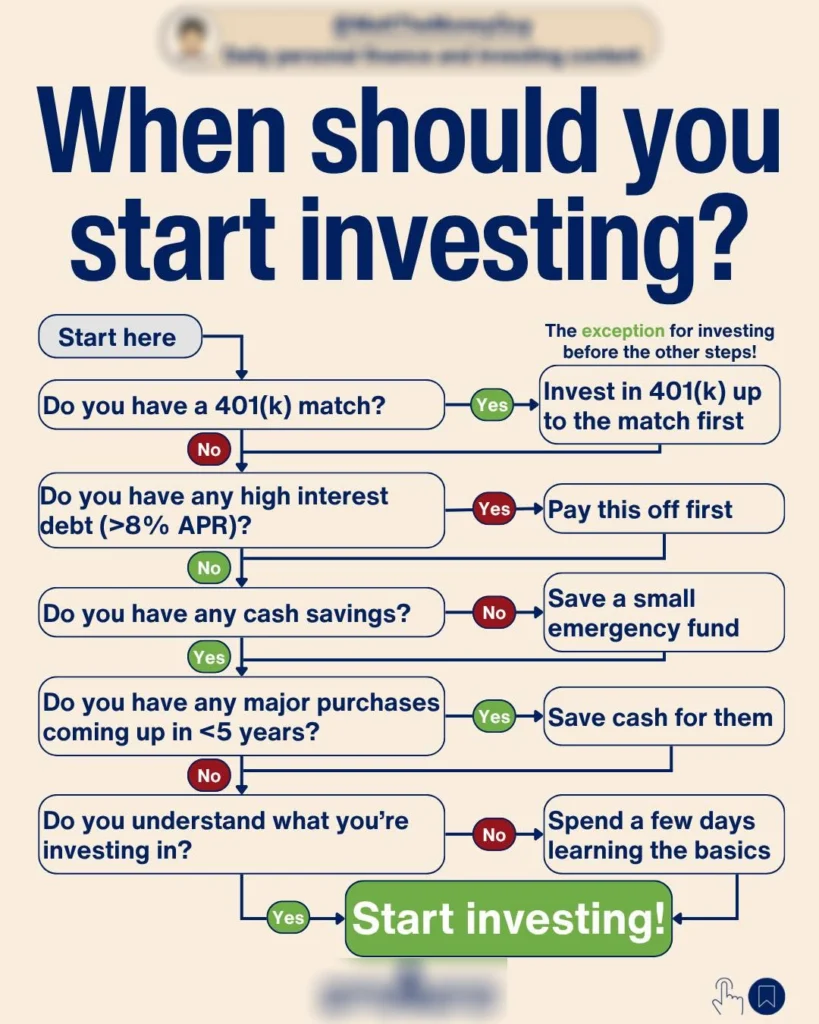
Much of modern financial planning treats wealth building as something that begins when money is invested. Before that, a list of preliminary tasks needs to be completed: control spending to generate free cash flow, establish an emergency fund, and manage debt. Once those boxes are checked, the real work of “building wealth” begins.
This is the wrong order of operations, and it’s made worse by economic reality. Thanks to the consequences of inflating the money supply, most households have very little room to build meaningful savings and invest for retirement at the same time — the personal saving rate was only 3.0 percent in May 2026 (U.S. Bureau of Economic Analysis, 2026). When there’s only enough to do one, whichever comes first determines whether a foundation ever gets built.
Wealth should not be measured only by account balances, but by the freedom and capability those resources provide.
If you have a problem and you have access to enough capital to solve the problem, you don’t actually have a problem.
When a car needs to be replaced and you have the capital to buy another one, you can solve the problem without taking on the obligations of debt. If an employer wants to force you to violate your conscience, but you have enough capital to provide for your family during a job search, you have the freedom to walk away.
The emergency fund is wealth. It gives you the ability to weather emergencies without turning to someone else’s capital, and it protects future income from being committed to interest and finance charges.
It should not be treated as the small pile of cash we reluctantly maintain before sending every additional dollar somewhere else. It is the beginning of the financial foundation on which everything else is built.
A Household Can Have Assets and Still Be Undercapitalized
A business can own large amounts of valuable equipment, real estate, and long-term investments and still run into trouble because it does not have enough working capital.
Households can make the same mistake. A family may have substantial money in retirement accounts, equity in a home, or other assets but not be able to handle the normal expenses of life.
Vehicles need to be repaired or replaced. Jobs end unexpectedly. A son’s education or a daughter’s wedding requires capital. A dream home comes on the market. Without capital, a family either borrows or watches the opportunity pass by.
You can’t spend net worth.
A well-run business maintains enough working capital to keep operating, absorb disruptions, and respond to opportunities without depending on outside financing. This is a working capital reserve. Without one, a business can be forced to sell assets at a loss, turn to debt, or face insolvency.
The emergency fund from the previous section is not separate from the working capital reserve, or a smaller version of it. It is the acorn. The reserve is the tree it grows into. Households should build it with the same intention a business does: sized to actually carry the family through disruption and opportunity, not maintained as an afterthought.
How Big Should the Working Capital Reserve Be?
Your family’s working capital reserve should begin big enough to support the life you currently have, minimizing or eliminating your need for outside financing today. But your standard of living will likely continue to increase, and your need for capital will grow with it.
It should be larger than a 3–6 month rule of thumb would suggest. This is not merely an emergency fund; it is a working capital reserve. It serves as an emergency and opportunity fund. Anything above the minimum you determine becomes available for opportunities.
If you were running a business that you knew would be successful as long as it was managed honestly, how large would you want the business to grow? That business is your financial foundation — your family banking system.
Your Money Is Capital, Not Cash
Your working capital reserve is not petty cash. It is capital. This is an important distinction in how you think about your finances — but it isn’t how you’ve been taught to think about your money.
What is capital? Economists have argued over the term for well over a century. F.A. Hayek, introducing Carl Menger’s Principles of Economics, described the classical concept of capital as “the money value of the property devoted to acquisitive purposes” (Menger, 1976).
Cash is spent and gone, like eating the seed corn instead of planting it. Capital is preserved because its purpose is to acquire more — whether it grows quietly where it sits, or is deployed toward something new. If you use capital for consumption, you need to restore it if you want it to remain capital, available for the next need.
Your personal finances should be thought of as a bank that serves your family as its primary client. That means managing the complete banking function (storage, movement, and repayment).
When capital leaves the reserve to finance something your family needs, the job is not finished. The capital needs to be restored. It doesn’t matter that you control the system — if the owner continually consumes the bank’s capital without replacing it, the bank will eventually go out of business.
Controlling the banking function means accumulating capital, directing it where it is needed, and restoring what you use so that the foundation remains available for the next need.
Invest From a Position of Strength
Banks hold capital to provide financing for whatever activity their customers engage in. That can be simply living life. It can be purchasing cars and making home repairs. It can be funding a child’s education or wedding, or paying medical bills. For the bank, each of these things represents an investment.
This is also true for your family banking system. When you use your reserve to finance your next car or your son’s first car, that represents an investment for your family banking system. As long as you are an honest owner and manager of your family bank, interest that would have been paid to another bank stays in the family economy.
But banks also provide capital for customers to invest externally. They provide funds for business startups and investment properties, and finance homes being flipped. Banks will even finance the purchase of an asset, taking that asset as collateral.
Investing from your foundation works differently. There is no application and no credit check, because you are acting as both lender and borrower. You set the terms, and as an honest banker you hold yourself to them: what you use, you restore. And because no outside lender controls that financing arrangement, no outside lender can call the loan or force repayment on its schedule. If the market falls or housing prices crash, you cannot be forced to sell.
This also allows for maximizing contributions to qualified retirement plans, such as a 401(k) — not simply because it’s what you’re supposed to do, but because it’s what you’ve deliberately chosen, now that the foundation makes it safe to.
If your foundation can already support what life requires today, then money locked away for decades is not a risk. A downturn, a lost job, an unexpected need — without a financial foundation, each of these can force you to liquidate retirement accounts, paying taxes and penalties. That is the difference between accumulating money for the future while still borrowing to handle life today, and being free of that trap.
The Order You Choose Determines Whether You’re Free
It is not that planning and investing for the future are a problem — that is what we should be doing. The problem comes when investing is given priority over building the capital required to support life today.
Prioritizing investing too early makes you fragile. Your net worth might look strong on paper, but that’s exactly where it stays — locked away for decades, or exposed to the risk of having to sell at the wrong time if you’re forced to touch it early. There’s never a problem until there’s a problem.
Then dependency shows up. When the unexpected arrives and you can’t access your own capital, what is that dollar you can’t spend actually worth? So you turn to a credit card or a bank and pay interest on money that could have built your own foundation instead.
A properly built foundation addresses both problems at once. It gives you access to your own capital so you are prepared for the emergency before it happens, while giving your investments room to grow undisturbed, because you were never forced to touch them in the first place.
The foundation is built by systematically accumulating capital. Maintaining it means restoring what you use in real terms, accounting for inflation and opportunity cost, each time you use it. That is what it means to control the banking function.
Lay the foundation first. If you do, everything built on top of it will be stronger. A financial foundation isn’t built by accident — it’s built on purpose, one decision at a time.
Where that capital is stored matters too. It should be kept in an asset that is safe, accessible, and capable of growing without exposure to ordinary market volatility. Commercial banks commonly hold permanent life insurance for many of these same qualities. Its cash value provides stable, contractually supported balance-sheet value, and banks may hold an amount approaching 25 percent of their Tier 1 capital before regulators treat it as a significant concentration.
A properly designed participating whole life policy can provide similar characteristics for a family’s working capital reserve while also protecting the household with a permanent death benefit. I explain that storage decision in Your Emergency Fund Doesn’t Have to Live in a Bank.
If you want to explore building a financial foundation for your family, Schedule a 30-minute clarity call.
Semper Reformanda.
References
Menger, C. (1976). Principles of economics (J. Dingwall & B. F. Hoselitz, Trans.; F. A. Hayek, Intro.). Institute for Humane Studies. (Original work published 1871)
U.S. Bureau of Economic Analysis. (2026, June 25). Personal income and outlays, May 2026. https://www.bea.gov/news/2026/personal-income-and-outlays-may-2026

See What Greater Financial Control Could Look Like
Explore how the banking function operates in your household, business, or church—and whether the Infinite Banking Concept could help you retain more control of capital and cash flow.